
All social media platforms with monetization are driving outrage politics. It's just been demonstrated.

The X country label controversy this past weekend demonstrated something that isn't just a MAGA accounts problem. It's an economics problem.
This post got started when I watched this video from Brett at MeidasTouch that went viral over the weekend, showing how X's new country-of-origin feature exposed major political accounts are actually foreign operations. This morning, I did some cursory research to get into more depth, and the result explains a lot of what we’re all experiencing in terms of chaos and conflict polluting what used to be a more civil online world.
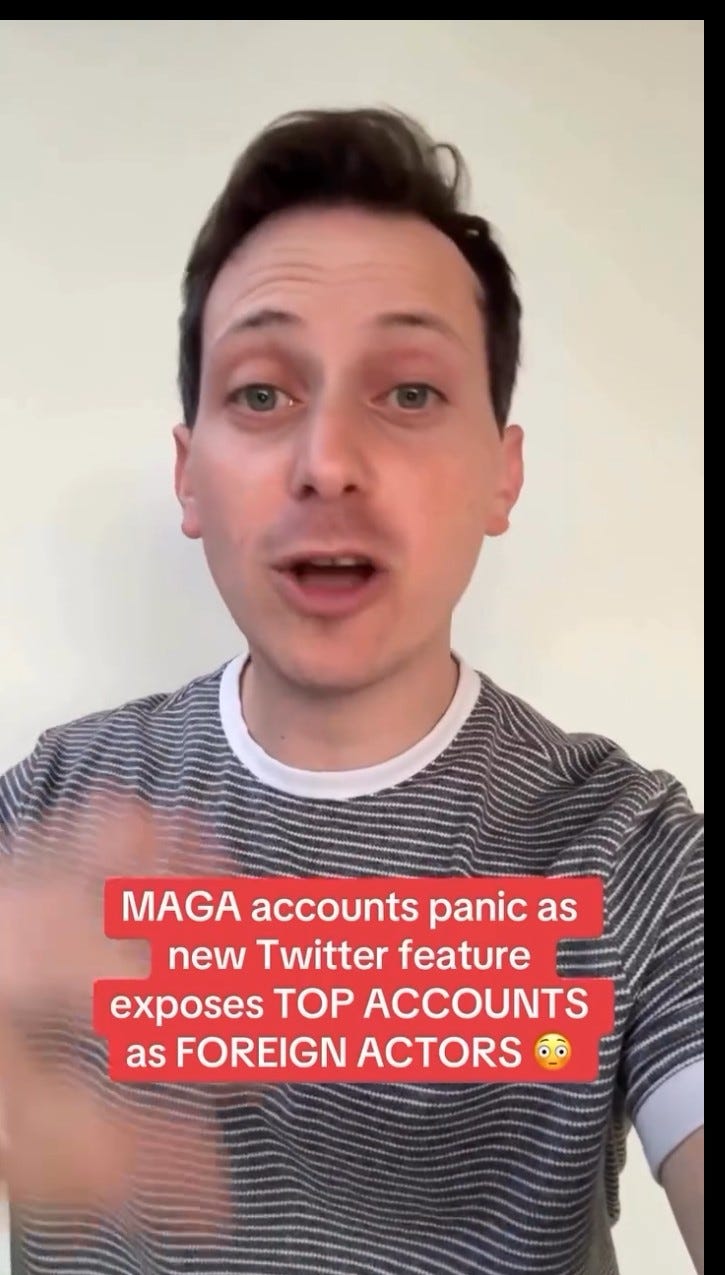
"Just think about the foreign influence operations that are happening right now on this app. Think about the lawmakers who feel pressured by accounts like this. Think about the disinformation that spreads as a result of all these accounts out there." - Brett Meiselas @ Meidas Touch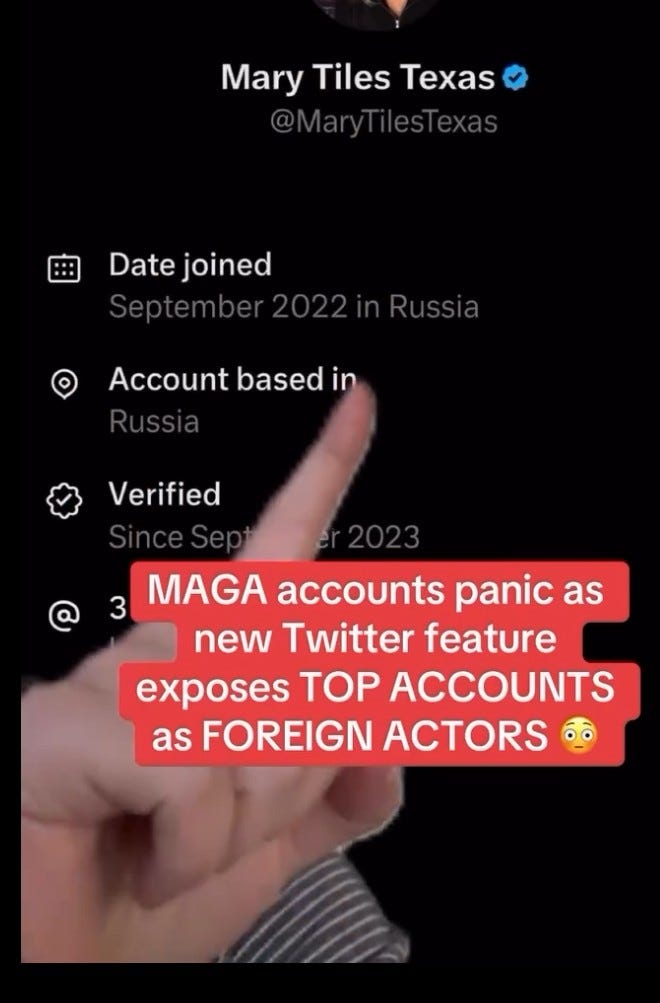
The Systemic Problem
The X country label feature accidentally revealed what researchers have known for years: a significant portion of the most inflammatory political content Americans see daily is produced by foreign operations motivated by platform payment systems, not by ideology.
What you may have missed in all of this is that this isn’t about left versus right. This is about platform economics. Social media platform monetization systems that reward engagement are distorting online dialogues; this is a fundamental architectural problem.
These platforms don't ask:
Why is this content engaging?
Who benefits economically?
What are the second-order effects on society?
They simply measure:
Does it keep users on platform longer?
Does it generate more ad impressions?
Does it drive more content creation?
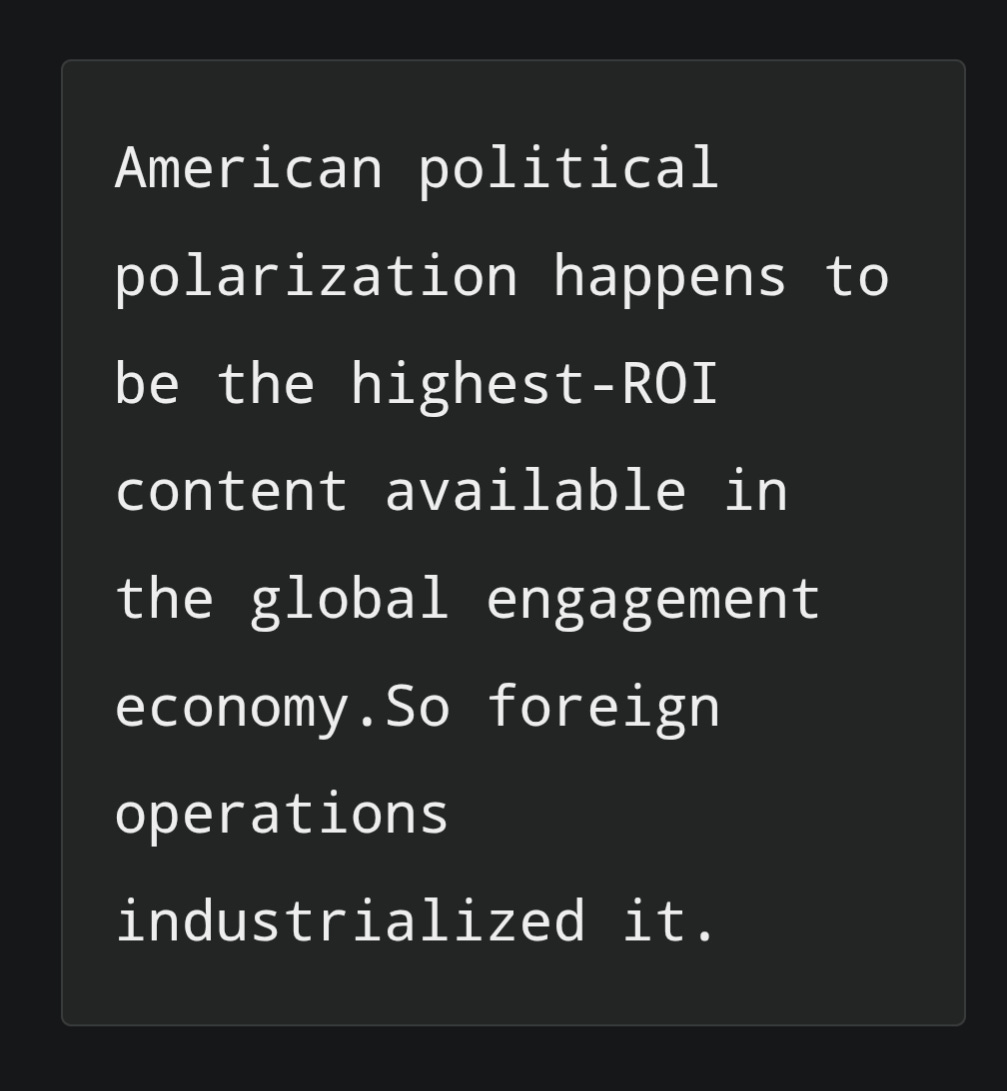
American political polarization happens to be the highest-ROI content available in the global engagement economy. So foreign operations industrialized it.
What This Means for You
Every time you see a viral political post that makes you angry, ask:
Who benefits economically from my anger?
Is this designed to inform me or enrage me?
Would I share this if I knew it might be monetizing polarization?
Again, the X country label feature accidentally revealed what researchers have known for years: a significant portion of the most inflammatory political content Americans see daily is produced by foreign operations motivated by platform payment systems, not by ideology.
As long as platforms pay for engagement without verifying economic motivations, American political discourse will remain a commodity in the global attention economy.
The outrage you feel? Someone, somewhere, is getting paid for it.
Let me show you some research that I found with just a bit of digging this morning and share a bit more about what that research suggests.
What Actually Happened
On November 22-23, 2025, X rolled out an "About This Account" feature showing users' country of origin based on IP addresses, app-store data, and activity patterns. Within hours, the political internet erupted.
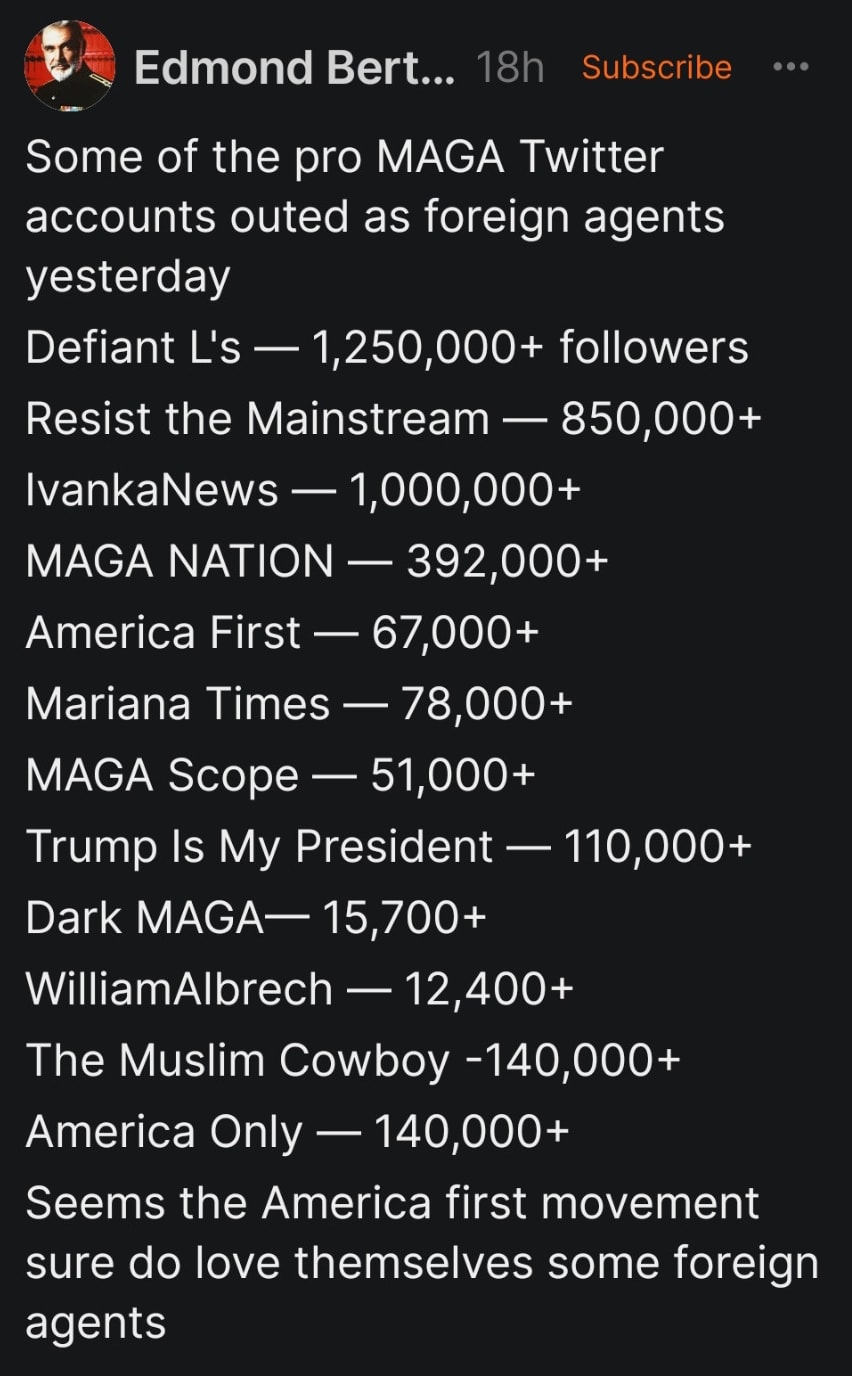
Democratic influencers celebrated as major MAGA accounts were exposed as operating from Nigeria, Russia, Eastern Europe, and Bangladesh. The MAGANationX account—with 400,000 followers and a bio reading "Patriot Voice for We The People"—turned out to be based in Eastern Europe. The IvankaNews account, with 1 million followers posting about immigration threats and Islamic dangers, operated from Nigeria.
But here's what everyone missed: Democratic and liberal accounts were simultaneously exposed as foreign operations too.
The feature revealed "Proud Democrat" accounts operating from Kenya, "anti-Trump Republican" accounts from Austria, and GOP-aligned accounts from Nigeria. Both sides of the American political spectrum were being operated by the same playbook, often by the same types of operations.
X disabled the feature within hours, citing "technical inaccuracies" from VPNs. But the damage—or rather, the revelation—was done.
This Isn't Ideology. It's Arbitrage.
The content these accounts produce is ideological and political. But consider it like fish bait. It's unclear if the motivation is ideological at all. It seems like it could be purely driven by economic arbitrage.
Research on Kenyan political influence operations revealed that successful influencers can earn more than the average monthly salary by getting content trending for just a few hours. One operator admitted to working simultaneously for opposing political factions, maintaining separate account portfolios—one set promoting pro-Kenyatta content, another for pro-Ruto content.
This is the model being applied to American politics at industrial scale.
The Economic Model
The strategy is devastatingly simple:
Create inflammatory political content targeting US audiences
Use engagement tactics (outrage, conspiracy, partisan attacks) to maximize virality
Collect platform payments based on views/engagement
Scale by operating multiple accounts across multiple platforms
Hedge by running accounts on both sides of political divides
For creators in Nigeria, earning $800 monthly through X engagement represents a well-paid job. In Bangladesh, $400 per month can support an entire team. When you can make that much by posting inflammatory content about American politics, the economic incentive is overwhelming.
Research shows that 70% of users in high-engagement markets are willing to share potentially false or misleading information in exchange for payment.
This isn't a bug. From the operators' perspective, it's a feature.
Why American Politics?
US political content generates extreme engagement because:
Americans are highly polarized
Political identity is deeply personal
Outrage drives sharing behavior
The stakes feel existential to participants
Foreign operators don't need to understand American politics deeply. They just need to understand what makes Americans angry at each other—and every engagement metric tells them exactly what works.
And it's not just X.
This Is Happening Across Every Platform With Monetization
Just with a few hours of research, I found documented evidence of these operations on:
X (Twitter) - The country labels exposed it directly
Facebook & Instagram - Meta has documented and removed coordinated inauthentic behavior operations from China, Russia, Romania, Iran, Bangladesh, Moldova, Nicaragua, Philippines, and Malaysia targeting US political discourse
TikTok - Disrupted 15 influence operations in 2024 alone, including networks from China, Iran, Ukraine, and Russia
YouTube - Documented in multiple academic studies as a primary amplification platform for content originating elsewhere
A 2024 Stanford study found that when platforms crack down on these networks, they simply migrate to other platforms. The economic incentive remains constant everywhere.
What You Need to Know
If political content is getting massive visibility and engagement, there's a good chance it's being supercharged by these economic dynamics. The platforms aren't being manipulated—they're working exactly as designed. They pay for engagement. US political outrage generates the most engagement. Foreign operations discovered this and industrialized it.
This is why X has become total garbage. This is why your Facebook feed feels toxic. This is why TikTok political content feels so performative and extreme. It's not organic. It's an economic outcome.
The monetization architecture itself is corrupting the entire ecosystem.
I hope this initial research is helpful. I'm genuinely interested in what else people learn about this issue—please share what you find out. The more we understand about how these systems actually work, the better equipped we are to navigate them.
This is clearly a systemic problem that goes way deeper than any single platform or political party.
And honestly, once you see it, you can't unsee it.
✊
/JDSAzimuth
- 2025-11-24 UPDATE -
The latest numbers that are being published on these foreign agent account illustrate the level of insanity that this has reached in the United States.
Source: